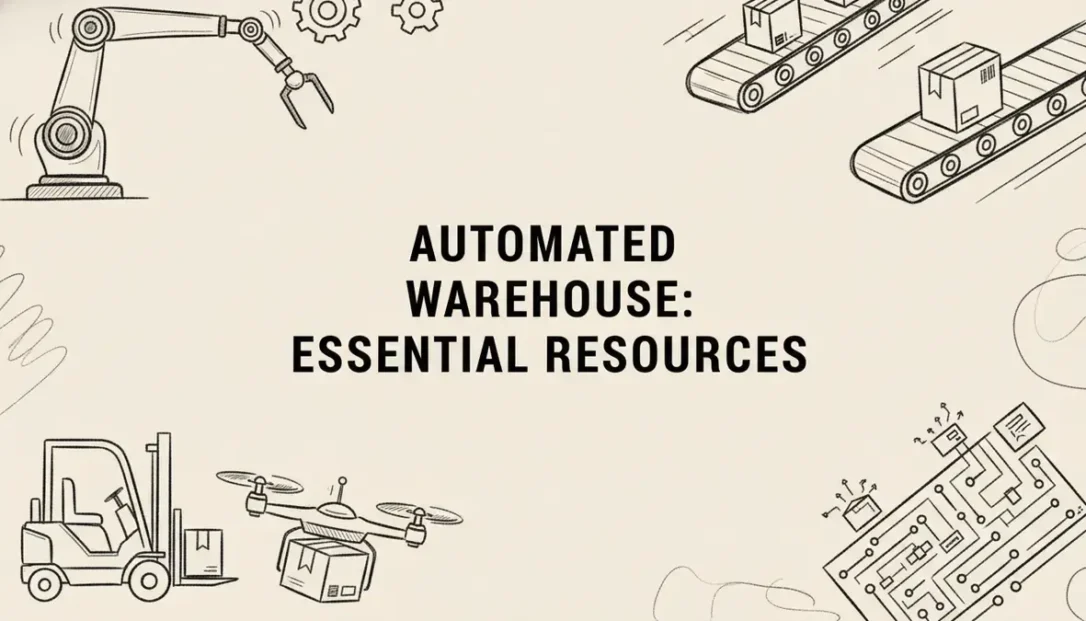
Modern warehouse operations face unprecedented pressure to meet customer demands for faster delivery while managing complex inventory across multiple channels. Automated warehouse systems have emerged as the critical solution, transforming traditional storage facilities into intelligent distribution centers. These systems combine robotics, software, and advanced logistics to create seamless operations that can handle thousands of orders with minimal human intervention.
The shift toward automation isn't just about keeping up with e-commerce giants—it's about survival in a market where efficiency directly impacts profitability. Organizations using LogicalDOC for document management understand the value of streamlined processes, and automated warehouses represent the physical equivalent of digital efficiency.

This comprehensive resource guide covers everything you need to navigate the automated warehouse landscape, from foundational technologies to implementation strategies. Whether you're evaluating automation for the first time or optimizing existing systems, these resources will help you make informed decisions and avoid costly mistakes.
Essential Automation Technologies
Warehouse Management Systems (WMS)

A robust Warehouse Management System serves as the brain of any automated facility. Modern WMS platforms integrate with multiple automation technologies to orchestrate complex operations across receiving, storage, picking, and shipping.
SAP Extended Warehouse Management stands out as the enterprise-grade solution for large operations. This comprehensive platform handles everything from slotting optimization to labor management, with advanced features like wave planning and cross-docking capabilities. Organizations typically choose SAP EWM when they need deep integration with existing ERP systems and can justify the significant implementation investment.
Why It Matters: The right WMS can reduce picking errors by up to 99.9% while increasing throughput by 25-40%. Without proper system integration, even the most advanced robotics become expensive paperweights.
Manhattan Associates WMS excels in complex distribution environments where multiple fulfillment strategies operate simultaneously. Their strength lies in handling omnichannel operations where the same inventory serves retail stores, e-commerce orders, and wholesale customers. The system's advanced allocation algorithms ensure optimal inventory positioning while maintaining service levels across all channels.
Blue Yonder WMS (formerly JDA) focuses heavily on AI-driven optimization and predictive analytics. Their machine learning algorithms continuously optimize warehouse operations based on historical patterns and real-time conditions. This makes it particularly valuable for seasonal businesses or operations with highly variable demand patterns.
Robotics and Automation Hardware
Amazon robotics (formerly Kiva Systems) revolutionized warehouse automation with their mobile drive units that transport entire shelving pods to picking stations. While Amazon keeps the latest technology internal, similar systems from companies like Locus Robotics and 6 River Systems offer comparable capabilities for other organizations.
The key advantage of mobile robotics lies in flexibility—these systems can adapt to changing layouts and seasonal demand without major infrastructure modifications. Implementation typically requires 6-12 months and can increase picking productivity by 200-300%.
Automated Storage and Retrieval Systems (AS/RS) represent the heavyweight champions of warehouse automation. Companies like Daifuku, Schaefer Systems, and Murata Machinery create massive vertical storage systems that maximize space utilization while providing rapid access to inventory.
Pro Tip: AS/RS systems work best for operations with predictable demand patterns and high-velocity SKUs. The initial investment often exceeds $2 million, but the space savings and labor reduction can justify costs within 3-5 years.
Conveyor systems from companies like Honeywell Intelligrated and Bastian Solutions form the circulatory system of automated warehouses. Modern conveyor networks include sophisticated sorting capabilities, automatic dimensioning, and integration with pick-and-pack stations.
The latest conveyor technologies incorporate AI-powered traffic management that can reroute packages around bottlenecks in real-time. This prevents the cascade failures that historically plagued large sorting facilities during peak periods.
Vision and Scanning Technologies
Zebra technologies dominates the mobile computing and scanning market with ruggedized devices designed specifically for warehouse environments. Their latest generation includes voice-directed picking, augmented reality overlays, and advanced analytics that track worker productivity without feeling invasive.
Cognex leads in machine vision systems that can identify, measure, and sort products without human intervention. Their deep learning algorithms can distinguish between similar products, detect damage, and ensure proper packaging orientation. These systems become particularly valuable when handling returns or dealing with vendor packaging inconsistencies.
Software and Integration Platforms
Transportation Management Systems (TMS)
Oracle transportation management provides comprehensive shipping optimization across all modes of transportation. The system's strength lies in its ability to consolidate shipments, optimize routes, and manage carrier relationships while maintaining visibility throughout the delivery process.
For organizations already using LogicalDOC for document management, Oracle TMS offers similar benefits for transportation documentation—centralizing carrier contracts, proof of delivery, and compliance documents in a searchable, auditable system.
MercuryGate TMS excels in complex logistics scenarios involving multiple carriers, modes, and service levels. Their optimization algorithms can evaluate thousands of shipping options in seconds, considering factors like cost, transit time, and service reliability. The platform particularly shines for companies managing both inbound and outbound transportation.
Inventory Optimization Software
Blue ridge global specializes in demand forecasting and inventory optimization for complex supply chains. Their machine learning algorithms analyze hundreds of demand signals to predict future needs while optimizing safety stock levels across multiple locations.
Key Takeaway: Effective inventory optimization can reduce carrying costs by 15-25% while improving service levels. The key is finding software that can handle your specific demand patterns and supply chain constraints.
ToolsGroup focuses on probabilistic forecasting and multi-echelon inventory optimization. Their approach works particularly well for organizations with seasonal demand, promotional activities, or long lead times where traditional forecasting methods struggle.
Analytics and Business Intelligence
Tableau and Microsoft Power BI have become the standard platforms for warehouse analytics and performance monitoring. These tools can integrate data from WMS, TMS, and automation systems to provide comprehensive operational dashboards.
The most successful implementations focus on a few key metrics rather than trying to track everything. Critical KPIs include order cycle time, picking accuracy, inventory turns, and labor productivity—metrics that directly impact customer satisfaction and operational costs.
Implementation and Consulting Resources
System Integrators and Consultants
Accenture supply chain brings deep industry expertise and change management capabilities to large-scale automation projects. Their strength lies in managing the human side of automation while ensuring technical systems deliver promised benefits.
KPMG Supply Chain Advisory excels in the financial and strategic aspects of warehouse automation. They can model the business case, identify funding options, and develop implementation roadmaps that minimize disruption to ongoing operations.
Deloitte digital supply chain focuses on digital transformation and the integration of emerging technologies like IoT, blockchain, and AI into warehouse operations. Their approach works well for organizations looking to leapfrog current technology generations.
Technology Vendors and Partners
Honeywell intelligrated provides end-to-end automation solutions from design through implementation and ongoing support. Their integrated approach can simplify vendor management while ensuring all components work together seamlessly.
Dematic specializes in highly automated solutions for e-commerce and retail operations. Their modular approach allows for phased implementation, which can help manage both costs and operational risk during deployment.
Training and Education Resources
Professional Development Programs
Council of Supply Chain Management Professionals (CSCMP) offers comprehensive certification programs covering all aspects of supply chain and warehouse management. Their courses provide both theoretical foundation and practical application of automation technologies.
Warehousing Education and Research Council (WERC) focuses specifically on warehouse operations and provides detailed training on automation technologies, implementation strategies, and performance optimization.
Comparison of Training Approaches
| Training Type | Duration | Best For | Cost Range |
|---|---|---|---|
| Online Certification | 3-6 months | Individual skill development | $500-$2,000 |
| Executive Programs | 1-2 weeks | Strategic decision makers | $5,000-$15,000 |
| Vendor Training | 1-5 days | Specific system users | $1,000-$5,000 |
| Consulting Workshops | 2-3 days | Team development | $10,000-$25,000 |
Technical Training Resources
Siemens digital factory provides hands-on training for automation technologies including PLCs, SCADA systems, and industrial networks. Their programs combine classroom instruction with lab exercises using actual automation equipment.
Rockwell automation university offers comprehensive training on industrial automation and control systems. Their curriculum covers everything from basic electrical concepts to advanced programming and system integration.
Expert Tip: The most successful automation projects invest heavily in training before, during, and after implementation. Plan for at least 40 hours of training per key user, and budget for ongoing education as systems evolve.
Industry Analysis and Research
Market Research and Benchmarking
Gartner supply chain research provides comprehensive market analysis and technology evaluations for warehouse automation. Their Magic Quadrant reports help organizations understand vendor capabilities and market positioning.
Aberdeen group focuses on performance benchmarking and best practices research. Their studies provide detailed metrics on automation ROI, implementation timelines, and common success factors.
ARC Advisory Group specializes in industrial automation and manufacturing operations research. Their reports provide deep technical analysis of emerging technologies and vendor capabilities.
Industry Publications and News
Modern materials handling magazine covers the latest trends in warehouse automation, case studies, and vendor announcements. Their annual salary survey provides valuable insights into industry compensation trends.
Supply chain dive offers daily news coverage and analysis of supply chain and logistics developments. Their automation coverage includes both technology announcements and implementation case studies.
DC Velocity focuses specifically on distribution and fulfillment operations with detailed coverage of automation technologies and implementation strategies.
Financial and ROI Analysis Tools
Cost-Benefit Analysis Resources
ROI Institute provides comprehensive methodologies for calculating return on investment for complex technology projects. Their frameworks help organizations quantify both hard and soft benefits of automation investments.
McKinsey Global Institute publishes detailed research on automation economics and implementation strategies. Their reports provide industry-specific insights into automation trends and financial impacts.
Funding and Investment Resources
Equipment Leasing and Finance Association (ELFA) connects organizations with financing options for automation equipment. Many automation projects can be structured as operating leases, which can improve cash flow and reduce implementation risk.
Industrial development authorities in many states offer incentives for automation investments that create or retain jobs. These programs can provide grants, tax credits, or low-interest loans for qualifying projects.
Financial Reality Check: Most warehouse automation projects require 18-36 months to achieve positive ROI. Factor in training costs, productivity losses during implementation, and ongoing maintenance when building your business case.
Regulatory and Compliance Resources
Safety and Standards Organizations
Occupational Safety and Health Administration (OSHA) provides comprehensive guidelines for warehouse safety, including specific requirements for automated systems. Their consultation services can help organizations identify potential safety issues before they become problems.
Robotics Industries Association (RIA) develops safety standards and best practices for industrial robotics applications. Their guidelines cover everything from system design to worker training requirements.
National Institute for Occupational Safety and Health (NIOSH) conducts research on workplace safety and health issues related to automation and robotics. Their publications provide evidence-based recommendations for safe automation implementation.
International Standards
International Organization for Standardization (ISO) maintains standards for warehouse management systems, automation equipment, and safety protocols. ISO 9001 quality management standards apply to most automation vendors and can help evaluate vendor capabilities.
International Electrotechnical Commission (IEC) develops standards for industrial automation equipment and systems. These standards ensure compatibility and safety across different vendors and technologies.
Technology Integration Resources
API and Data Integration
MuleSoft provides integration platforms that can connect warehouse management systems with automation equipment, ERP systems, and external partners. Their pre-built connectors simplify integration with popular warehouse technologies.
Dell boomi offers cloud-based integration services that can handle the complex data flows required for automated warehouse operations. Their platform works particularly well for organizations using multiple cloud-based applications.
IoT and Sensor Technologies
Cisco Industrial IoT provides networking infrastructure and sensor technologies for warehouse automation. Their systems can monitor everything from equipment performance to environmental conditions while providing the security required for industrial applications.
GE Digital offers industrial IoT platforms that can predict equipment failures and optimize maintenance schedules. Their Predix platform integrates with most major automation vendors and can significantly reduce unplanned downtime.
Common Questions About Automated Warehouse Resources
What's the most critical resource for automation success?
Change management and training resources often determine success more than technology selection. The best automation systems fail when organizations don't adequately prepare their workforce for new processes and technologies. Successful implementations typically allocate 20-30% of their budget to training and change management activities.
Organizations should start with basic automation concepts and gradually build technical expertise. Many companies make the mistake of jumping directly into advanced technologies without building foundational knowledge among their teams.
How do you evaluate automation vendors effectively?
Start with reference visits to similar operations rather than relying solely on vendor demonstrations. Seeing automation systems in production environments reveals issues that don't appear in controlled demo environments. Ask specific questions about integration challenges, maintenance requirements, and actual productivity improvements.
Request detailed financial information including total cost of ownership, expected maintenance costs, and realistic implementation timelines. The lowest initial bid often becomes the most expensive option when hidden costs emerge during implementation.
Vendor Evaluation Tip: Always visit at least three reference sites and speak directly with operations managers, not just IT staff. Ask about problems they encountered and how the vendor responded to issues.
What role does document management play in automation?
Document management becomes critical as automation increases operational complexity. Automated systems generate massive amounts of data, maintenance logs, compliance records, and performance reports that must be organized and accessible.
Organizations using LogicalDOC find that automated warehouses create even more need for robust document management. Equipment manuals, maintenance procedures, compliance certificates, and training records must be instantly accessible to maintain operational efficiency.
Modern automation systems integrate with document management platforms to automatically capture and organize operational data. This integration ensures that performance data, maintenance logs, and compliance records are immediately available when needed.
How do you handle automation project risk?
Start with pilot implementations in controlled areas before expanding to full operations. Most successful automation projects begin with a single process or zone, allowing teams to learn and refine procedures before scaling up.
Develop detailed contingency plans for system failures, including manual backup procedures and emergency protocols. Even the most reliable automation systems require planned maintenance and occasionally experience unexpected failures.
Maintain strong relationships with system integrators and vendors throughout implementation and beyond. Quick access to technical support can mean the difference between minor disruptions and major operational problems.
What's the timeline for seeing automation benefits?
Expect 6-12 months for basic productivity improvements and 18-36 months for full ROI realization. Initial implementation often reduces productivity as teams learn new systems and processes. Plan for this learning curve and communicate realistic expectations to stakeholders.
Different automation technologies provide benefits on different timelines. Simple conveyor systems might show immediate throughput improvements, while complex robotics systems require months of optimization to reach full potential.
The most successful projects establish clear metrics and milestones throughout implementation rather than waiting for final completion to measure success. Regular progress reviews help identify issues early and maintain stakeholder support.
Conclusion
Building a successful automated warehouse requires careful selection and integration of multiple technology platforms, vendors, and resources. The key lies in taking a systematic approach that begins with clear operational goals and builds toward comprehensive automation over time. Organizations that invest in proper planning, training, and vendor relationships see the greatest returns from their automation investments. Get started with LogicalDOC to see how proper document management supports your automation journey. Ready to get started? Visit LogicalDOC to learn more.

Latest posts by Cristian Fulger (see all)
- Open Source Document Management Systems - 10/05/2026
- Document Management Explained - 09/01/2026
- Open Source Document Management System - 08/25/2026
- Business Document Management Explained - 08/19/2026
- Document Management Benefits Explained - 08/11/2026